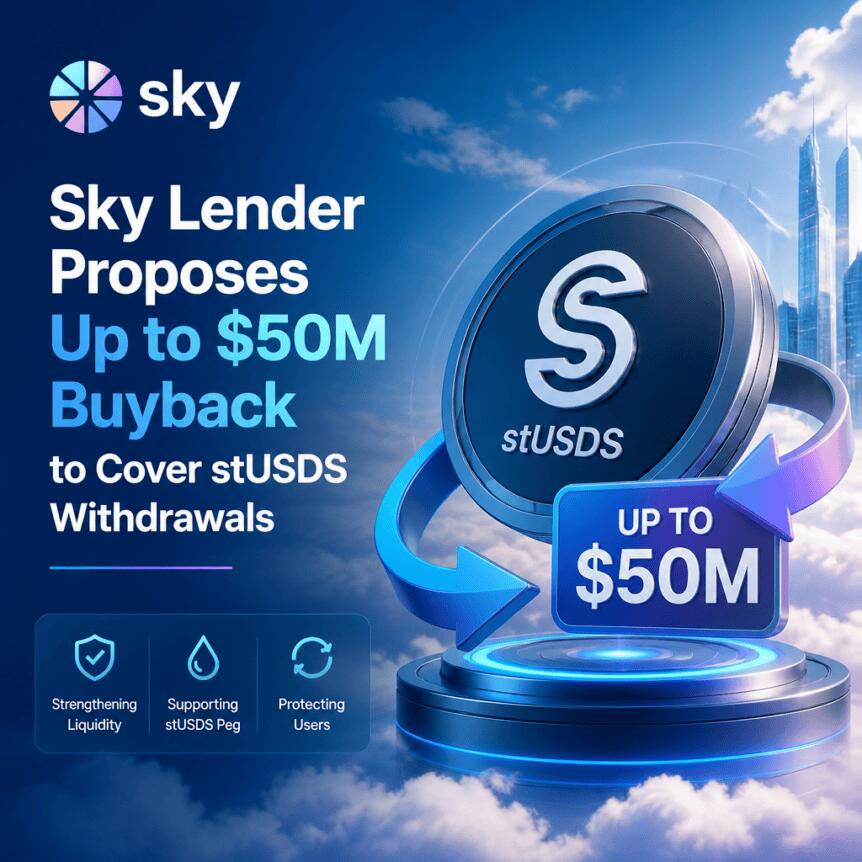
Sky Protocol’s stUSDS liquidity crunch has moved from slow-moving withdrawals to an explicit proposal: a lender in the pool wants the project to deploy $40 million to $50 million of its reserves to buy back SKY tokens from borrowers. The aim is to convert borrowers’ staked-collateral exposure into liquidity that depositors can withdraw.
The proposal, posted by a lender using the name Conquercube, comes at a time when the stUSDS lending pool has reportedly been at or near full utilization since Nov. 10—meaning depositors have had limited available liquidity and are increasingly dependent on either new deposits or repayments to access funds.
Key takeaways
- A Sky Protocol stUSDS lender proposes a $40M–$50M reserve-backed buyback of SKY from borrowers to improve withdrawal access.
- The buyback is designed to use the same USDS proceeds to pay down a seller’s loan during the transaction, potentially reducing outstanding borrower debt.
- Bitquery data cited in the proposal indicates a wallet linked to co-founder Rune Christensen accounts for roughly 48% of the pool’s debt as of Thursday.
- Christensen acknowledged his borrowing has contributed to withdrawal difficulties, and said he repaid 3 million USDS while still owing about 77 million USDS.
A reserve buyback aimed at unlocking stUSDS withdrawals
In the forum proposal, Conquercube argues that Sky Protocol should intervene directly to address constrained liquidity in the stUSDS pool. Depositors supply USDS, while borrowers can draw loans by posting staked SKY as collateral. When utilization remains close to 100%, depositors typically cannot withdraw without either incoming liquidity or repayments from borrowers—conditions that have reportedly become strained since Nov. 10.
The proposed solution centers on an over-the-counter (OTC) buyback. Conquercube’s plan calls for Sky to spend $40 million to $50 million of reserves buying SKY tokens from borrowers. Crucially, each sale would be structured so that the USDS proceeds used to purchase the SKY also go to pay down the seller’s existing loan in the same transaction.
By reducing outstanding debt and increasing available funds within the pool, Conquercube estimated the buyback could lower utilization to a range of 68% to 74%. That would represent a meaningful shift from a near-full utilization state, though it does not imply a return to open-ended liquidity without additional repayments or deposits.
What utilization means for depositors
In lending pools like stUSDS, utilization is often the clearest indicator of whether withdrawals can be met immediately. When utilization is high, most available USDS is already tied up in active loans. Deposit withdrawals then depend on borrowers repaying, or on new deposit inflows that restore reserves for withdrawal queues.
According to the proposal, the stUSDS pool has been at or near full utilization since Nov. 10. Under such conditions, depositors seeking USDS can find themselves constrained unless the pool receives repayment liquidity quickly. The buyback mechanism is therefore positioned as a way to generate repayment-like effects without waiting for borrowers to unwind collateral on their own schedule.
Data spotlight on co-founder-linked borrowing
One reason the buyback proposal gained traction is the concentration of debt. Blockchain analytics firm Bitquery, cited in the discussion, reportedly found that a wallet associated with Sky co-founder Rune Christensen accounted for 48% of the debt backed by the stUSDS pool as of Thursday.
That concentration matters because concentrated borrower exposure can amplify liquidity bottlenecks. If a single large borrower delays repayments—or faces constraints converting collateral into liquid assets—the pool can remain constrained even if other borrowers are active.
Christensen acknowledges repayment progress and an ongoing balance
Monday’s response from Christensen added personal context to the figures. He acknowledged that his borrowing contributed to the withdrawal difficulties experienced by depositors. He said he repaid 3 million USDS and still owed approximately 77 million USDS on loans backed by his staked SKY.
Christensen also indicated that, to reduce the remaining balance, he was exploring a direct sale of some SKY tokens to institutional investors. That statement aligns conceptually with the buyback approach discussed in the forum—both aim to convert SKY collateral exposure into liquid USDS that can help reduce borrower debt, thereby improving pool liquidity.
However, the two paths differ in structure and control. Christensen described an effort to sell SKY tokens directly, while the Conquercube proposal asks Sky Protocol to use reserves to purchase SKY from borrowers through an OTC process that simultaneously pays down loans. For depositors, that distinction could influence how quickly liquidity improvements arrive, as well as which parties hold the resulting SKY tokens.
Why this proposal could be a turning point
If the reserve buyback proceeds as proposed, it would effectively accelerate loan repayment by importing the “buyer side” of liquidity into the lending pool. Because the mechanism ties buyback proceeds directly to debt paydown, it is aimed at reducing the amount of USDS locked in active loans rather than merely changing the ownership of assets.
Investors and depositors will likely watch for whether utilization drops toward Conquercube’s estimated 68% to 74% range, and whether the pool’s liquidity improves fast enough to ease withdrawal constraints. They will also want clarity on whether such actions are consistent with Sky Protocol’s broader governance and risk management approach—especially given the outsized role of co-founder-linked debt identified by Bitquery.
Another variable is execution: the proposal depends on OTC sales and reserve deployment, both of which can be affected by timing, counterparties, and settlement conditions. Even with a well-designed mechanism, liquidity relief may arrive unevenly if transactions take longer than expected or if outstanding debt reductions fall short of assumptions.
Readers should monitor the governance vote on the proposal and subsequent updates from Sky and major borrowers. The immediate question is whether the planned buyback can be executed at the proposed scale and timeline—and whether that materially reduces stUSDS utilization enough to restore smoother withdrawals for depositors.