U.S. President Donald Trump said his pivot toward crypto was driven less by ideology than by geopolitics, arguing that if the United States did not embrace digital assets, China would. Speaking at a Monday press event at the White House to announce “Trump Accounts”—investment accounts for children under 18—Trump framed Bitcoin and crypto as a strategic industry the U.S. can’t afford to cede.
When asked whether the child-focused investment accounts would include Bitcoin, Trump responded that he became a “big crypto guy” because of competitive pressure from China. He also reiterated that he initially was not pro-crypto, but said he watched the sector grow into a “huge industry,” and later concluded that the U.S. needed to move first.
Key takeaways
- Trump said he turned pro-crypto because he believed China would advance first “if we don’t have it.”
- At the White House announcement of “Trump Accounts,” he addressed whether the new accounts would touch Bitcoin, without offering a detailed structure for crypto exposure.
- Trump described staying hands-off in discussions with his family about crypto investments.
- His remarks highlight ongoing scrutiny of crypto influence given reported family crypto-related earnings and political fundraising activity by the industry.
- He suggested investigations into crypto declined when he became more supportive, echoing criticism of enforcement shifts during his administration.
Why Trump says he shifted toward crypto
Trump’s comments added context to his changing rhetoric over the past few years. During his first term, he had said he was “not a fan” of crypto and referred to Bitcoin as “a scam.” In Monday’s exchange, he offered a different rationale: not personal conviction, but the belief that the U.S. needed to participate in a rapidly expanding market before a rival country did.
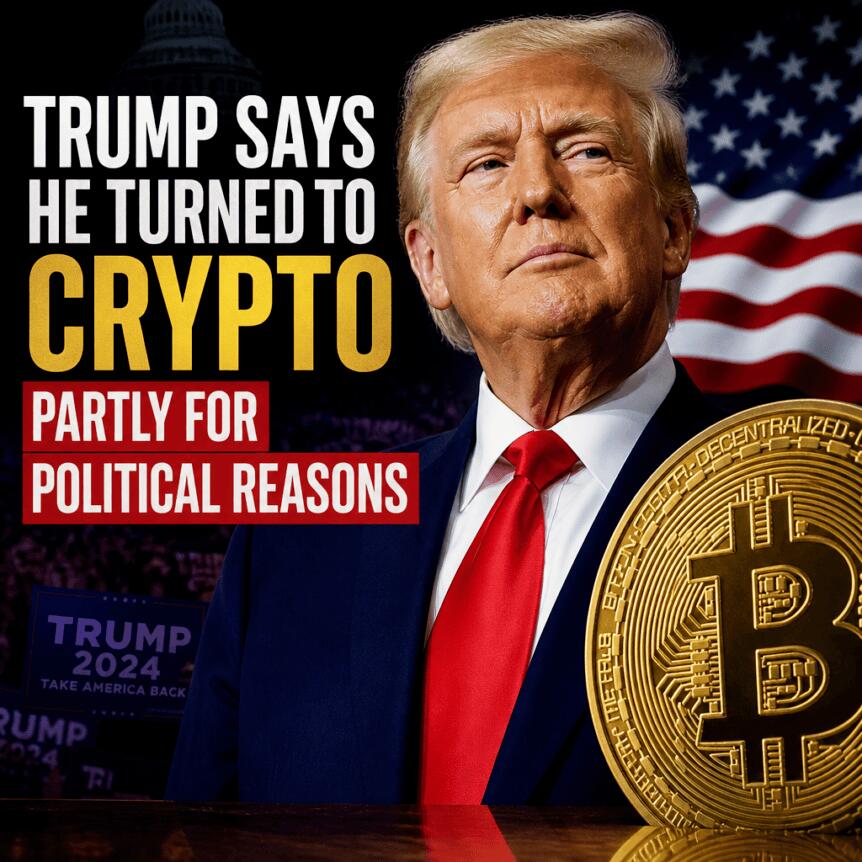
“I’ve become a big crypto guy only for one reason: If we don’t have it, China’s going to have it,” Trump said. He described watching crypto “grow” after taking less interest earlier on, and said he now sees it as a large and profitable industry.
Trump also said he got involved “a little bit for politics,” adding that he recognized “a lot of people that love crypto.” The framing matters for investors and users because it signals that, at least publicly, his administration’s stance may be justified through national competitiveness rather than consumer protection or technological neutrality.
“Trump Accounts” and the Bitcoin question
Trump delivered the remarks while unveiling “Trump Accounts,” an investment account program for children under 18 announced during a press event in the Oval Office. The question from reporters focused on whether the accounts would permit exposure to Bitcoin.
While Trump’s reply emphasized the broader importance of crypto—particularly Bitcoin’s geopolitical relevance—he did not provide specifics in the available remarks about how crypto, if any, would be implemented within the accounts. The gap between political endorsement and operational detail is important: parents, advisors, and compliance teams would need clarity on whether digital assets are directly included, held through other instruments, or excluded entirely.
For market participants, the key watch point is whether the administration follows through with concrete policy guidance that determines how, and to what extent, crypto could become part of mainstream, retail-oriented investment products for minors.
Trump’s family crypto interests: “I don’t talk to them”
Trump said he does not discuss his family’s crypto involvement. The question is especially sensitive given the financial disclosures and the public record around his household’s crypto exposure.
According to financial disclosures released June 30 by Cointelegraph, Trump made more than $1.4 billion last year from crypto-related activity. The disclosures cited Trump and his sons as co-founders of World Liberty Financial, a crypto platform that generated a large portion of his crypto-related income.
Despite those ties, Trump said his interest in crypto is “not a question of a personal thing.” He added, “I let my kids do whatever the hell they do. I don’t talk to them, ever, talk to them about it.”
The statement doesn’t remove the underlying concern for observers—namely whether political messaging and regulatory direction could benefit from family-linked interests. But it does show how the president is trying to separate public policy arguments from personal decision-making.
Enforcement investigations and regulatory scrutiny
Trump also addressed federal crypto enforcement, claiming that the Biden administration “dropped all investigations” after he “went very pro-crypto.” His remarks come amid a broader debate about how aggressively U.S. regulators have pursued crypto-related cases under different administrations.
In the material discussed, it is noted that under the Trump administration, the Securities and Exchange Commission stopped multiple investigations and withdrew or settled enforcement actions filed against crypto companies—some of which had donated to Trump. The president then used that alleged contrast to underscore his leverage as president.
“Every time I see a crypto guy where they dropped an investigation, I said: ‘You’re lucky I’m president,” Trump said.
For readers tracking regulatory risk, the implication is not a single policy promise but a pattern: Trump’s public support for crypto is intertwined with assertions about enforcement outcomes. That makes future developments—such as any formal guidance, legislation, or regulatory posture changes—central to understanding how U.S. compliance and litigation risks may evolve for exchanges, token issuers, and custody providers.
What to watch next
Beyond the political message, the practical question is whether “Trump Accounts” will offer transparent details on investment options and any crypto exposure. Investors and families should watch for follow-on policy documents that clarify implementation, because the difference between endorsement and enforceable product design will determine how quickly (or slowly) crypto could move into mainstream youth-facing financial tools.