Security researcher Joe Grand says most cryptocurrency users should not expect to spot advanced tampering on hardware wallets, even if they follow best practices. Grand, who has worked on recovering funds from compromised devices and on techniques to extract information from wallet memory chips, told Cointelegraph that identifying subtle physical modifications is beyond the practical capabilities of ordinary buyers.
The warning comes amid confirmed losses tied to Ledger hardware wallets sold through a reseller known as CryptoBilis. According to Ledger, one affected device contained an unauthorized implant. The firm said the implant captured users’ recovery phrases and transmitted them over cellular networks—an attack method that targets users without relying on malicious wallet firmware updates.
Key takeaways
- Grand argues that even technically skilled users can’t realistically inspect every device for sophisticated physical tampering.
- Ledger attributes reported losses to unauthorized implants that captured recovery phrases and sent them over cellular networks.
- Trezor says authenticity and seal checks help, but they cannot guarantee a device wasn’t physically modified.
- Hardware wallet “new chain of trust” concerns remain, since buyers must still rely on intermediaries in the supply chain.
- Trezor plans to reduce reseller numbers “as a preventive” measure, while Grand suggests design changes that make physical replacement harder.
Why buyers can’t “inspect their way out” of tampering
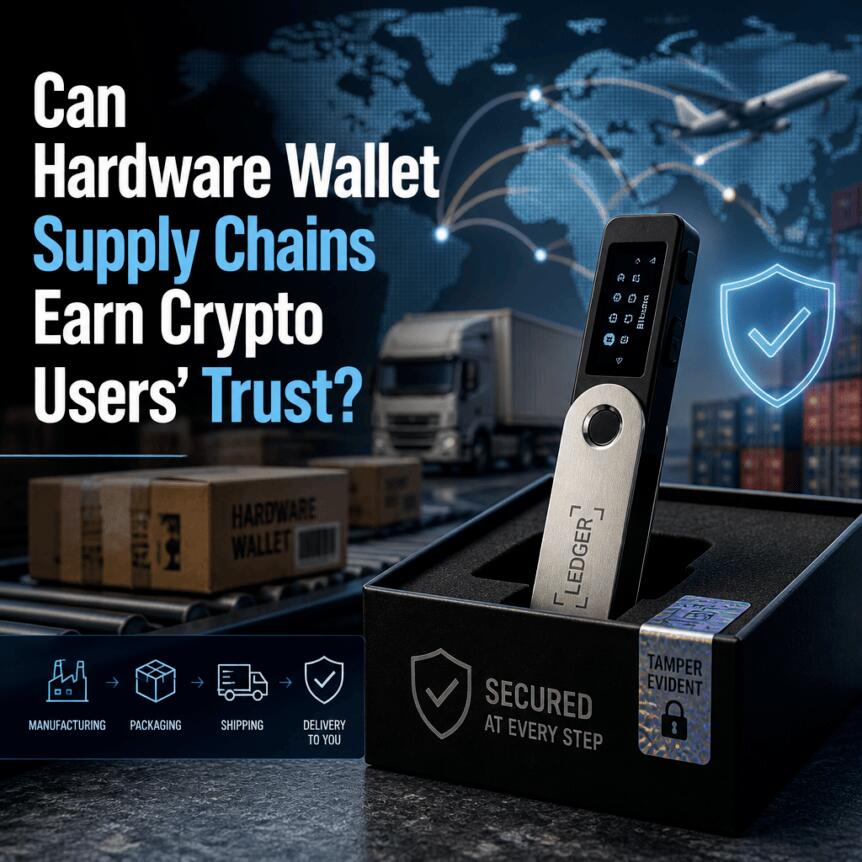
Hardware wallets exist to keep private keys offline, reducing exposure to online threats that commonly affect software wallets. But Grand’s point is that offline key storage does not automatically translate into invulnerability once devices travel through real-world channels—warehouses, resellers, and shipping routes—where attackers may attempt supply-chain manipulation.
Grand said it is difficult to even explain to users how they should verify devices, noting that even professionals cannot examine every unit at a level sufficient to detect all forms of sophisticated tampering. In practice, buyers tend to rely on packaging cues, visual checks, and assumptions about custody prior to purchase.
That limitation matters because the most damaging compromises are often the ones that don’t require overt changes to firmware or visible behavior. Instead, an attacker may aim for subtle hardware-level access that is hard to detect without specialized tooling.
Ledger’s supply-chain incident spotlights cellular exfiltration
Ledger confirmed that an affected device sold via CryptoBilis contained an unauthorized implant. Earlier reports raised alarms after crypto losses were linked to Ledger devices distributed through the reseller, which Ledger listed as authorized in Indonesia, Malaysia, and the Philippines.
In its account of what happened, Ledger said the malicious implants in those devices captured recovery phrases from the screen and transmitted the data via cellular connections. That distinction is important: the attack did not merely attempt to alter software controls—it focused on extracting sensitive user material during normal wallet use.
Ledger’s confirmation aligns with a broader threat model in which attackers try to bypass the “trust boundary” created by secure hardware. Even if firmware remains authentic, an added component can still steal what the user sees and enters during the recovery process.
Related coverage from Cointelegraph highlighted that MediaMarktSaturn pulled Ledger products after tampering reports, underscoring how quickly distribution networks can respond to public confirmation of physical compromise.
“More control” can still mean more intermediaries to trust
Crypto analyst Mati Greenspan told Cointelegraph he has never used a hardware wallet despite working in the industry since 2013. He framed the decision less as skepticism of cryptography and more as skepticism about the operational reality of buying a secure device.
Greenspan’s argument centers on trust chains. When someone purchases a hardware wallet, the buyer is not only trusting the device’s cryptographic protections, but also the manufacturer, distributors, suppliers, and whoever handled the device before it arrives. The more links in that chain, the harder it becomes to reason about what might have been changed.
Casa CEO Nick Neuman similarly emphasized that avoiding intermediaries entirely is not possible. “There is always an intermediary you will need to trust,” he said, adding that users should spread risk rather than rely on a single point of confidence.
For investors and users, this becomes more than a technical debate. It suggests that operational choices—where devices are sourced, how they are distributed, and how quickly resellers respond to emerging incidents—can become part of the security posture.
Authenticity checks help, but they don’t eliminate physical risk
Trezor, one of Ledger’s best-known competitors, said its devices undergo authenticity checks and only accept signed firmware. However, the company acknowledged that those safeguards cannot fully address physical tampering scenarios.
A Trezor spokesperson told Cointelegraph that users can check packaging and holographic seals and look for unusual marks, but these steps cannot guarantee the device has not been modified. That position mirrors Grand’s earlier warning: a device can appear legitimate while still being compromised at the hardware level.
Trezor also described how Ledger’s reported implants create a distinct challenge. Ledger said the implants capture information from the screen without modifying firmware, which is different from attacks that can potentially be detected through firmware verification alone. Trezor stated it has not observed this type of attack on its own devices.
As another response to the broader tampering allegations, Trezor announced it would reduce the number of resellers as a preventive step. The intent is straightforward: fewer distribution partners can mean fewer opportunities for devices to be altered before reaching buyers.
Design changes that raise the cost of tampering
Grand suggested that hardware wallet manufacturers can do more to make tampering physically harder. He pointed to design ideas such as transparent casings that expose internal components, or tamper-resistant enclosures that would require an attacker to recreate the housing to conceal modifications.
His underlying logic is economic and practical. If attackers must rebuild the entire external structure to hide additional hardware, the attack becomes more difficult and more likely to leave detectable traces.
Grand also referenced anti-tamper guidance from electronics engineer Dave Jones, while cautioning that these measures should not be treated as a complete solution. Even strong physical barriers can make supply-chain attacks harder, but they cannot eliminate the risk entirely—especially when devices can still pass through many hands before purchase.
For readers, the takeaway is not that hardware wallets are insecure; it’s that their security assumptions depend on both cryptography and custody. The next signals to watch are whether manufacturers and major resellers adopt tighter distribution controls, improve physical tamper resistance, and provide clearer consumer guidance about verification steps that are meaningful for the specific threat models at hand.