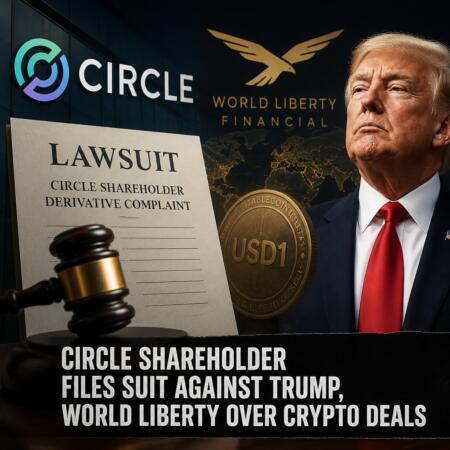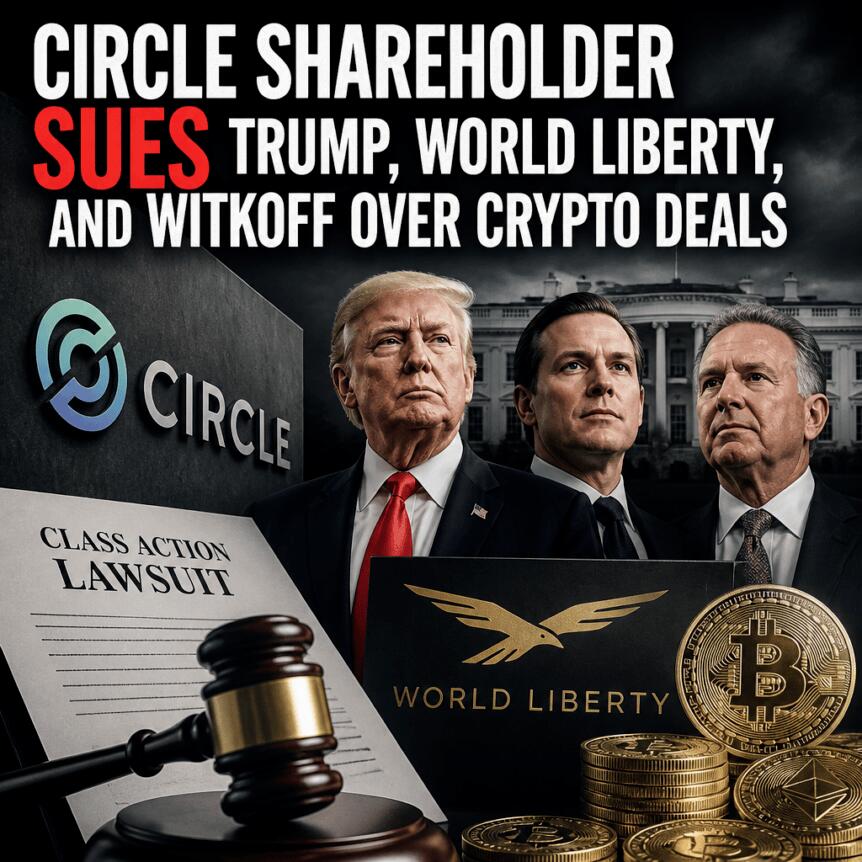
A Circle Internet Financial shareholder has filed a lawsuit accusing US President Donald Trump, his World Liberty Financial venture, and related affiliates of enabling foreign-government money flows into the cryptocurrency market through a Trump-linked stablecoin deal tied to Binance. The filing, submitted in the US District Court for the District of Columbia, centers on a reported $2 billion transaction involving a foreign entity and Binance that allegedly used the USD1 stablecoin.
The plaintiff, J. Benjamin Greenberg, alleges that the arrangement—linked to an Abu Dhabi-based firm and involving USD1—harms Circle’s ability to compete in stablecoins, claiming it creates a pathway for governments to funnel funds using Trump’s crypto business. Circle said it did not initiate or participate in the lawsuit.
Key takeaways
- A Circle shareholder sued President Donald Trump, World Liberty Financial, affiliate entities, and Special Envoy Steve Witkoff over a reported $2 billion Binance-related deal.
- The complaint argues the use of Trump-linked stablecoin USD1 enabled foreign government funding streams that injure Circle’s competitive position in the stablecoin market.
- The lawsuit focuses on an Abu Dhabi entity, MGX, connected to the United Arab Emirates and reportedly investing using USD1.
- Circle says it did not file or direct the lawsuit and declined comment on pending litigation.
- The case arrives as Democrats increasingly use Trump’s crypto ties in campaign messaging ahead of the 2026 midterms.
Circle shareholder alleges constitutional violations tied to stablecoin channels
According to the Thursday filing in the US District Court for the District of Columbia, Greenberg claims Trump, Witkoff, and World Liberty caused harm to Circle by creating what the plaintiff describes as a corruption-facilitating route for foreign governments to use USD1 to move money tied to Binance.
The complaint also invokes the US Constitution’s Foreign Emoluments Clause, arguing Trump violated constitutional restrictions through the crypto-linked arrangement. Greenberg is seeking a declaration that Trump’s conduct is unconstitutional and requesting court orders that would block similar financial interests without congressional consent.
Greenberg—who the filing says holds 10,000 ordinary shares of Circle—asks the court to enjoin the alleged “brazen corruption,” require an accounting of payments connected to foreign states, and compel the entities holding the emoluments to disgorge what the plaintiff characterizes as improper benefits. The complaint also seeks compensatory and punitive damages.
“Plaintiff asks this Court to declare the President’s corrupt acts a violation of the Constitution, to enjoin the brazen corruption alleged below, to order an accounting of the billions in payments from foreign states to the President and his businesses, to require the companies holding them to disgorge the emoluments the President accepted through them, and for compensatory and punitive damages.”
MGX, Abu Dhabi connections, and the reported Binance investment via USD1
A core element of the lawsuit is an Abu Dhabi entity identified as MGX, which the complaint ties to a United Arab Emirates royalty figure. The alleged $2 billion investment into Binance was reportedly executed using the USD1 stablecoin in 2025.
The underlying reporting referenced by the lawsuit draws on a February report from The Wall Street Journal, which said that another investment vehicle backed by Sheikh Tahnoon bin Zayed Al Nahyan agreed to buy a 49% stake in World Liberty for $500 million. That WSJ reporting also tied the broader ecosystem of Trump-linked crypto business to Gulf-backed capital and stake acquisition.
The complaint’s argument, in practical terms, is that stablecoin rails can become commercially significant when tied to political access and state-linked financing. Greenberg alleges Circle is harmed because, as a competitor in stablecoins, it cannot match the advantages he says flow from the Trump-linked pathway.
Circle and the White House respond; World Liberty does not comment
Circle said in a statement provided to Cointelegraph that it “did not initiate, direct, authorize, or participate in the filing,” adding that the company would not comment on ongoing litigation.
The White House, through spokesperson Anna Kelly, rejected the allegations, saying Trump has “no conflicts of interest“ with his crypto investments and characterizing the lawsuit as “frivolous.”
A spokesperson for World Liberty did not respond to Cointelegraph’s request for comment.
Crypto ties become campaign material as midterms near
The lawsuit lands amid intensifying political scrutiny of Trump’s crypto-related activities. The article’s background notes that Trump’s reported dealings include crypto investments and that reporting by the consumer advocacy nonprofit Public Citizen estimated losses for investors connected to crypto-related ventures associated with Trump.
With less than two weeks until the 2026 midterms and early voting underway in some states, Democrats running for reelection are reportedly leaning into Trump’s crypto connections as a campaign issue. The coverage points to Senator Mark Warner releasing a campaign ad highlighting that Trump made “more than $600 million alone from the crypto memecoin,” using messaging that frames crypto profits and political influence as intertwined.
This broader political context matters for crypto markets not only because it can shape public perceptions of stablecoins and custodial risk, but also because it may increase pressure for lawmakers to examine financial conflicts of interest tied to digital-asset projects. While courts decide the merits of the claims, political momentum can influence how regulators and legislatures prioritize compliance questions related to stablecoin issuance, cross-border fund flows, and governance structures.
What to watch next
As the case proceeds, attention will likely focus on whether the court views the alleged foreign-government payments and stablecoin settlement mechanics as sufficient grounds for constitutional relief, and on what additional evidence either side submits regarding the nature of the Binance-linked transactions and the role of USD1 in moving value.