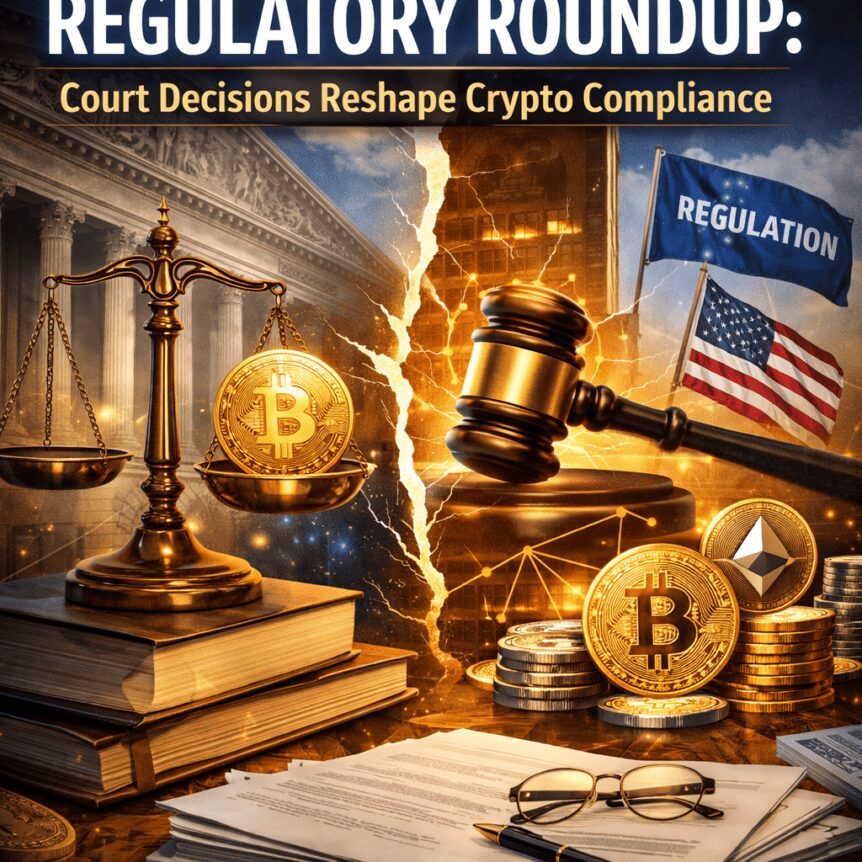
Regulatory and enforcement developments shape ongoing crypto litigation and compliance landscape
In a sequence of legal and regulatory actions that underscore the industry’s ongoing scrutiny, high-profile crypto executives and local governments are navigating tightened oversight and courtroom outcomes. Former Celsius CEO Alex Mashinsky recently moved to represent himself in court after his counsel withdrew, while Celsius and FTX continue to illustrate the sector’s broader structural vulnerabilities. Separately, Washington state and Iowa advanced distinct regulatory efforts to curb crypto kiosk activity, signaling a growing emphasis on consumer protection and regulatory compliance at state and municipal levels. In New York, prosecutors pursue asset forfeiture linked to Sam Bankman-Fried, highlighting ongoing asset-recovery efforts in the wake of high-profile crypto failures.
These developments occur against the backdrop of bankruptcy proceedings and sweeping enforcement initiatives that have reshaped governance, licensing, and risk assessment for lenders, exchanges, and other crypto-enabled entities. The evolving regulatory posture—at federal, state, and local levels—continues to influence licensing, AML/KYC practices, and the management of consumer-facing crypto services.
Key takeaways
- Alex Mashinsky has chosen to proceed pro se as he faces prison time already imposed for fraud and price manipulation at Celsius Network.
- Roni Cohen-Pavon, Celsius’ former chief revenue officer, is slated for sentencing on May 13, with prosecutors having signaled potential leniency due to substantial assistance.
- Municipal and state regulators are tightening controls on crypto kiosks and ATMs, with Spokane Valley banning virtual currency kiosks/ATMs and Iowa adding rigorous oversight to formalize penalties for noncompliance.
- In New York, prosecutors seek to forfeit $10 million in cash tied to Sam Bankman-Fried, reflecting ongoing asset-recovery efforts as part of the broader FTX-related prosecutions.
Mashinsky’s pro se stance and sentencing backdrop
Legal filings indicate that, after a recent change in defense representation, Alex Mashinsky intends to proceed without counsel in the ongoing case surrounding his role at Celsius. The development comes as Mashinsky was previously sentenced to 12 years in prison for involvement in fraud and price manipulation at the Celsius lending platform. The decision to represent himself introduces a new dynamic into a case that has already drawn increased regulatory and judicial attention within the crypto finance sector.
The Celsius proceedings remain part of a broader wave of enforcement actions that have implicated multiple executives and entities tied to lender operations during the market downturn of 2022. The outcome of Mashinsky’s self-representation and any potential post-sentencing motions will be of interest to practitioners assessing how courts handle self-representation in complex, high-stakes financial wrongdoing cases within the crypto domain.
Subsequent sentencing considerations for Celsius leadership
Beyond Mashinsky, the legal process continues for Roni Cohen-Pavon, Celsius’ former chief revenue officer. Cohen-Pavon pleaded guilty in September 2023 and is set for sentencing on May 13. In a recent filing, U.S. prosecutors recommended that the judge consider Cohen-Pavon’s “substantial assistance” to the government at sentencing, a move that can carry mitigating weight in the final judgment. The recommendation, reported by prosecutors on May 4, signals a potential leniency trajectory, though the ultimate sentence will reflect a court assessment of the defendant’s conduct and cooperation.
The Celsius case is set against a broader context in which two major crypto platforms—Celsius and FTX—filed for bankruptcy in 2022 amid a sector-wide downturn. The distress experienced by these platforms has elevated attention on governance, risk controls, consumer protection, and the adequacy of disclosures in crypto-lending and related financial services.
Local and state regulatory actions on crypto kiosks and ATMs
Regulatory focus at the municipal and state levels has intensified as regulators seek to curb crypto-related scams and protect consumers. In Spokane Valley, Washington, the city council voted unanimously to adopt an ordinance prohibiting virtual currency kiosks and ATMs. The measure imposes a civil penalty of $250 for noncompliance and authorizes officials to revoke business licenses of operators found in violation. Entities hosting kiosks and ATMs face a 30-day compliance window, reflecting a rapid regulatory response to perceived consumer harms associated with crypto access points.
The Spokane Valley action aligns with a broader trend of local authorities scrutinizing crypto storefronts and services as scams affecting residents persist. The move potentially constrains the footprint of crypto kiosks in jurisdictions where consumer protection and enforcement resources are prioritized.
Meanwhile, Iowa’s regulatory posture expanded with the introduction of SF2296, which adds crypto kiosks to the state’s financial regulatory framework. The measure empowers state authorities to impose civil penalties and pursue injunctions against operators that fail to comply with the new regulatory regime, representing a meaningful expansion of oversight for crypto kiosks within the state. The public-facing communications from the Iowa Attorney General’s Office highlight the intent to establish robust oversight to deter scams and safeguard residents’ interests as these technologies permeate everyday financial interactions.
These actions illustrate a shift toward formalizing the oversight of crypto-enabled access points at multiple levels of government, with potential implications for operators, banks seeking to integrate crypto services, and investors monitoring compliance risk. For entities with cross-border or cross-jurisdictional activity, aligning with varying local requirements has grown increasingly complex and costly.
Asset forfeiture emphasis in the Bankman-Fried case
In a separate enforcement development, prosecutors in the Southern District of New York filed a motion to forfeit $10 million in cash linked to Sam Bankman-Fried. The funds were located in a Fiduciary Trust Company account and described by U.S. Attorney Jay Clayton as representing “the return of the investment made by [Bankman-Fried] in Semafor.” The filing underscores continued asset-recovery efforts following Bankman-Fried’s conviction and 25-year sentence for his role in defrauding FTX users and investors.
Bankman-Fried was ordered to forfeit more than $11 billion as part of the criminal judgment, a figure that remains unpaid as he pursues appeal proceedings. The forfeit action demonstrates the ongoing focus on disgorgement and asset recovery in high-profile crypto prosecutions, highlighting the cross-cutting implications for how proceeds of wrongdoing are identified, traced, and recovered, including assets held abroad or in complex custody arrangements.
These forfeiture matters illuminate the broader regime under which prosecutors seek to recoup proceeds linked to significant crypto-related fraud, and they intersect with regulatory expectations around transparency, financial misconduct, and the enforcement toolkit available to government authorities pursuing restitution and deterrence.
Closing perspective
The convergence of courtroom developments, state and municipal regulation, and high-profile asset-recovery actions confirms that enforcement and compliance considerations remain central to the crypto industry’s trajectory. The coming months will be critical for assessing how self-representation in complex cases influences sentencing, how leniency guidelines interact with substantial assistance in criminal matters, and how regulators reconcile consumer protection with the growth of crypto kiosks and other on-ramps. Observers should monitor ongoing court filings, regulatory rulemaking, and legislative activity that could recalibrate licensing, oversight, and enforcement across jurisdictions.