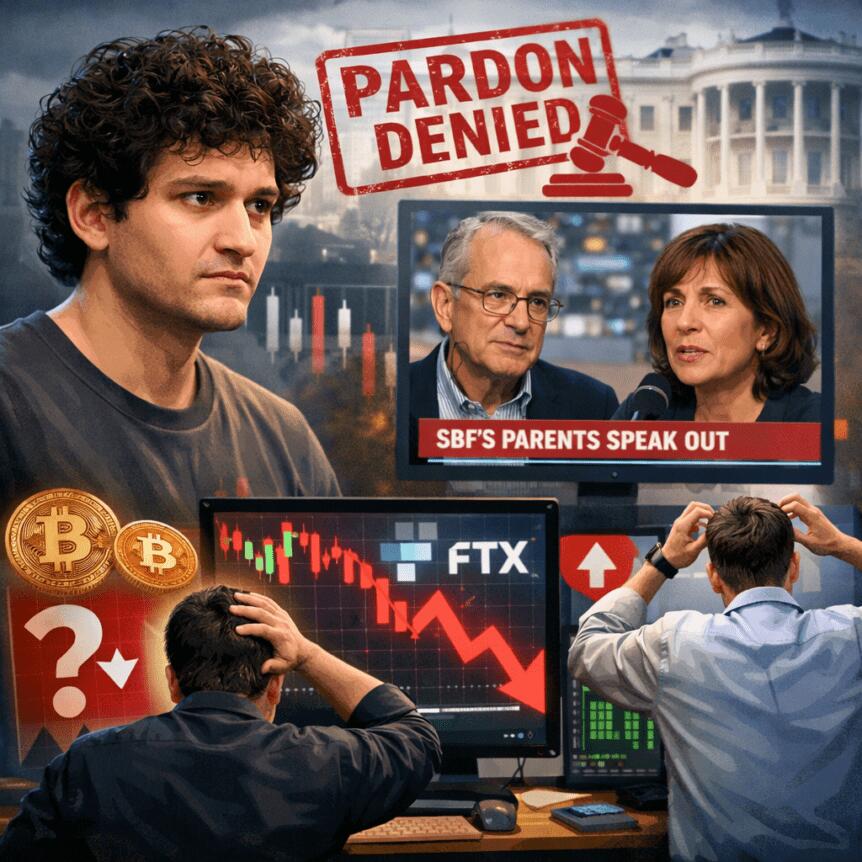
The odds of Sam Bankman-Fried receiving a presidential pardon remain a niche, high-profile topic shaping crypto policy discourse rather than a near-term legal turn. After a March interview with CNN featuring Bankman-Fried’s parents, the two leading American prediction markets trimmed their odds for a pardon in 2026, underscoring how public appeals and framing of the case can subtly influence sentiment around the former FTX chief executive.
Polymarket and Kalshi kept their 2026 pardon probability estimates in the single digits, yet each nudged slightly downward in response to the interview and subsequent media attention. Polymarket’s price implied an 11% chance of a presidential pardon this year, while Kalshi priced in about 9%. The moves followed a CNN broadcast in which Barbara Fried and Joseph Bankman argued that their son’s fraud conviction should be reconsidered and that Alameda Research borrowed customer funds from FTX, but the funds were not used improperly.
Key takeaways
- The latest prediction-market odds assign about 11% (Polymarket) and 9% (Kalshi) to a 2026 pardon for Sam Bankman-Fried, with minor declines after the parents’ CNN interview.
- FTX-related litigation has evolved from a 2023 bankruptcy-era dispute to a 2026 appellate effort, with Fried filing an appeal in February 2026 claiming new testimony could undermine government assertions about insolvency and Alameda’s deficits.
- The interview framed Bankman-Fried’s actions as mischaracterized by prosecutors, while his mother and father argued the prosecution was political and pledged to pursue exoneration, highlighting tensions over crypto policy and political influence.
- Political donations and crypto policy remain interwoven in the public narrative, as lawmakers and presidential contenders weigh the implications of clemency while crypto industry stakeholders monitor enforcement signals and regulatory direction.
Bankman-Fried pardon odds and the CNN interview
Market attention around a possible presidential clemency for Bankman-Fried has historically hovered between speculative and symbolic. After CNN aired an interview with Bankman-Fried’s parents, the probability signals on Polymarket and Kalshi shifted modestly downward. The interviews framed the case through a defense of the family’s view that the fraud conviction was built on a contested understanding of the funds flow and the role Alameda played alongside FTX. In their portrayal, they acknowledged that Alameda borrowed from FTX, but insisted the money was never misused and remained adequately secured in the system.
The interview also re-centered the public narrative around the family’s involvement in the case. Bankman-Fried has long positioned himself as a controversial figure in U.S. crypto policy—donating to both Democratic and other political figures—while the interview sought to separate his personal political activity from the broader enforcement actions taken by the government. The narrative tension—between alleged corporate mismanagement, political overtones, and the fate of customer funds—continues to shape how observers interpret the likelihood of a pardon.
Legal backstory: the bankruptcy case, the appeal, and what changed
FTX’s bankruptcy saga has been a central thread in the discourse around Bankman-Fried’s legal exposure. In a Delaware bankruptcy filing, FTX alleged that Bankman and his mother engaged in transfers and misappropriation, seeking to recover a $10 million cash gift and a $16.4 million Bahamas property. The filing painted a picture of a broader culture of misrepresentation and mismanagement, at least from the exchange’s perspective. The case was eventually dismissed without prejudice in February 2025, meaning it could be refiled in the future.
In February 2026, Fried filed an appeal on behalf of her son, arguing that new testimony could undermine three central government claims about FTX’s condition in late 2022. Those points were that FTX was insolvent on November 11, 2022; that there was no reasonable prospect of customer repayment; and that Alameda ran a multi-billion-dollar deficit on FTX’s books. Bankman-Fried countered that the money remained in place and never left the corporate estate, asserting that “the money was always there” and that Alameda possessed sufficient security.
The appellate move also sought to challenge the presiding judge, alleging “extreme prejudice” during the trial. Fried framed the prosecution as political, and both parents echoed a view that the Biden administration’s crypto stance contributed to a broader crackdown on the industry. While Bankman-Fried’s donations to Democratic politicians were noted in coverage, the interview emphasized a distinction between political activity and the merits of the case itself, arguing that the outcome should hinge on the facts rather than politics.
A broader frame: politics, policy, and the crypto industry
The discussion around pardons sits within a larger ecosystem of crypto regulation and enforcement in the United States. Analysts and lawmakers have long debated how clemency dynamics interact with the policy landscape—especially when high-profile figures are connected to the sector. A Campaign Legal Center analysis highlighted how clemency practices have sometimes rewarded loyalty or brokered deals, a lens some observers apply to the Bankman-Fried case as part of a broader clemency playbook.
On the political front, Senator Cynthia Lummis has publicly cautioned against expectations of a pardon, underscoring the harm she believes Bankman-Fried’s actions caused to individuals and the sector. President Trump’s own stance, as reported, has suggested he would not pardon Bankman-Fried, a position that, in turn, feeds into the wider public debate about the proper boundaries of executive clemency and the optics surrounding crypto-related prosecutions. Bloomberg has reported that Fried and Bankman-Fried have explored pathways to obtain a pardon since Trump’s ascent to the presidency, including discussions with advisers and figures in Trump’s orbit.
Meanwhile, Bankman-Fried’s March social-media post supporting a hardline stance on Iran’s policies—alongside a widely discussed ceasefire forecast in market betting odds—demonstrates how a single public posture can become a proxy for broader political risk signals within the crypto space. The market’s attention to these signals—ranging from clemency to geopolitical flashpoints—reflects a sector that remains highly sensitive to policy shifts, enforcement tone, and the personalities at the center of the case.
What readers should watch next
As the appellate process unfolds and the political weather around crypto policy continues to evolve, investors and users should monitor several threads. First, any fresh testimony or filings in the bankruptcy proceedings could reshape the government’s asserted facts about FTX and Alameda, potentially influencing both legal strategy and public perception. Second, the pardon conversation—whether it gains new momentum or fades—will continue to reflect the interplay between political considerations and crypto industry sentiment. Finally, broader regulatory developments, congressional inquiries, and executive actions will shape how the market prices risk around enforcement and governance as the case moves forward.
In short, while a Bankman-Fried pardon remains a speculative and low-probability event in the near term, the episode continues to serve as a barometer for how policy, politics, and a high-profile crypto failure interact in real time. Watch for new courtroom filings, any shifts in pardon discourse, and the evolving stance of policymakers on the crypto industry as the year progresses.