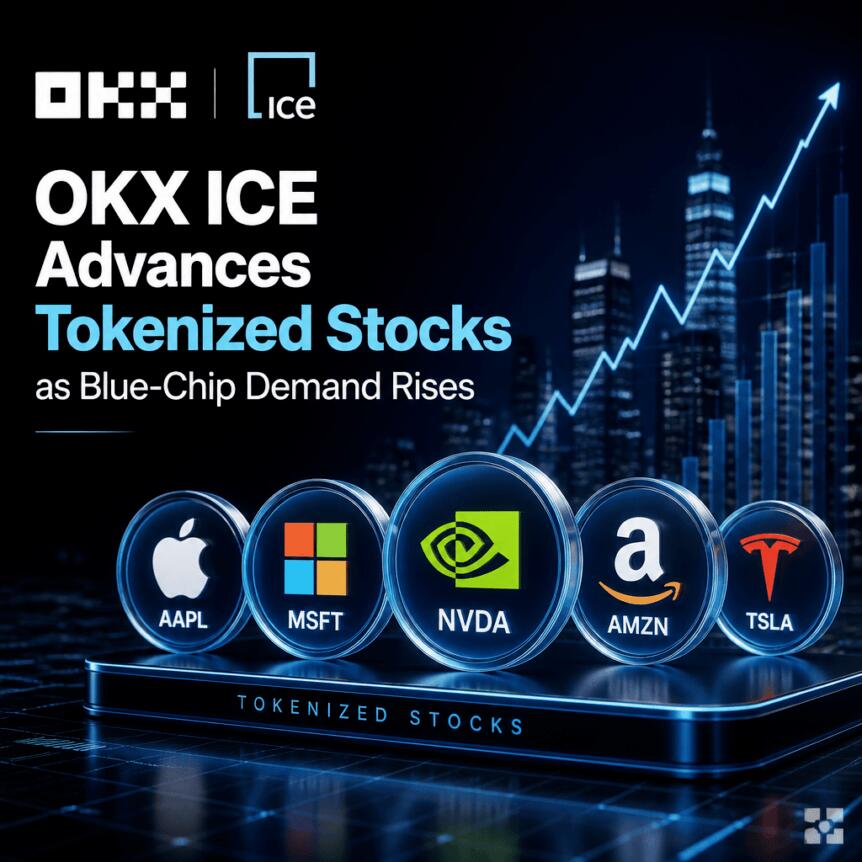
OKX and Intercontinental Exchange (ICE) are preparing to launch OKXICE, a tokenized stock trading venue, on Nov. 23—despite objections from 67 public companies and warnings from Nasdaq that trading across disconnected venues could fragment liquidity.
The initiative will operate under the US Securities and Exchange Commission’s temporary Innovation Exemption. Under the exemption framework, trading venues must provide companies an opportunity to object before tokenized shares—issued via an unaffiliated third party—are listed. JPMorgan Chase, McDonald’s, SpaceX, and Coca-Cola were among the firms that filed objections, according to OKX ICE’s public notice.
Key takeaways
- OKXICE is scheduled to begin tokenized stock trading on Nov. 23 under the SEC’s Innovation Exemption.
- Tokenized stocks can carry different rights depending on structure, and OKXICE says eligible investors will retain “the same rights, protections and ownership” as underlying shareholders.
- Sixty-seven companies objected to having their shares listed, triggering an objection-and-listing process tied to the SEC exemption.
- Regulatory and market-structure concerns persist, including warnings that tokenized trading across platforms could split liquidity and worsen price discovery.
- OKX expects more than 70 tokenized assets, including 59 exchange-traded funds (ETFs) and tokenized shares linked to major crypto firms and a set of preferred shares from Strategy.
OKXICE launch under the SEC’s temporary pathway
OKX and ICE say OKXICE will offer eligible US customers round-the-clock trading. The venue’s authorization relies on the SEC’s temporary Innovation Exemption, a mechanism designed to allow limited-market innovation while requiring safeguards such as an objection process for the underlying companies.
In its public materials, the companies’ objection process is framed as an important gate before tokenized shares are admitted. The objections reflect a tension between how traditional securities issuers view representation of ownership and how tokenized market proponents aim to broaden access, settlement cadence, and trading hours.
Former New York governor and OKXICE co-chair Andrew Cuomo, speaking to Cointelegraph, said the approach is intended to preserve investor entitlements. He described the offering as giving investors “the same rights, protections and ownership that come with the underlying shares.”
What tokenized stocks and tokenized ETFs can represent
Tokenized stocks are blockchain-based instruments that represent company shares or track the price of a security. However, the economic and legal rights attached to a tokenized product depend on how the token is structured, meaning that “tokenized” by itself does not guarantee identical treatment across offerings.
While rights may vary by design, demand for tokenized securities appears to be growing. According to data cited in the coverage, the distributed value of tokenized stocks and ETFs reached $3.88 billion on Nov. 11, up 13.4% over the prior 30 days. That uptick underscores why exchanges and liquidity providers are pushing to expand beyond pilot products and into fully functioning trading venues.
Companies object; OKXICE’s initial asset list
OKX expects OKXICE to list more than 70 assets. The proposed lineup is centered on ETFs—59 of them—along with tokenized shares tied to major crypto-related businesses such as Coinbase, Circle, BitGo, Robinhood, and Strategy. The plan also includes Strategy’s preferred shares.
Several notable public companies objected to the inclusion of their shares. The companies named in the objection filings include JPMorgan Chase, McDonald’s, SpaceX, and Coca-Cola, among others.
For investors, the object-and-list mechanism matters because it can affect which securities ultimately become available and whether tokenized instruments reflect the full breadth of a traditional exchange’s universe. It also sets an early precedent for how quickly tokenized equity ambitions can scale when issuers push back.
Liquidity fragmentation and volatility risks remain central concerns
The OKXICE rollout is landing in a market where questions about tokenized equity trading are still unresolved—particularly around liquidity and price discovery. The core concern is that the same underlying shares could trade simultaneously on traditional exchanges and on blockchain-enabled venues, potentially splitting order flow and making it harder to determine a single, efficient reference price.
A study by the International Monetary Fund found that tokenized stocks were about 1.5 times as volatile as the same stocks traded in traditional markets. The IMF also reported that decentralized exchanges showed the weakest liquidity and that prices diverged more from traditional market pricing than prices observed on centralized exchanges.
The IMF further warned that when trading and settlement both occur on a blockchain, the usual safeguards that help markets absorb shocks may be weakened. In a stressed market environment, these dynamics could—at least in theory—amplify leverage effects, tighten correlations between markets, and increase the likelihood of liquidity runs or fire-sale behavior.
Nasdaq’s argument adds another layer to the debate. In a January filing, Nasdaq warned that trading tokenized stocks on platforms outside traditional rails could fragment liquidity and make it harder for investors to access the best available price. Traditional US stock market hours run from 9:30 a.m. to 4 p.m. Eastern time on weekdays, excluding market holidays, though broker-dealers may offer premarket, after-hours, and overnight trading.
Cuomo’s response reframes the issue around timing and investor choice. He said the current market structure was “built for another era,” arguing that crypto markets already demonstrate the feasibility of 24/7 trading. In his view, extending that approach to equities does not require investors to accept “synthetic exposure” or surrender shareholder rights.
What to watch after Nov. 23
As OKXICE gears up for launch, investors and market participants should focus on whether trading volumes and spreads concentrate as expected—or whether liquidity fragmentation becomes evident in practice. The next key signals will be which assets clear the objection process, how closely tokenized pricing tracks traditional markets, and whether market-structure risks highlighted by regulators and the IMF show up in real trading conditions.