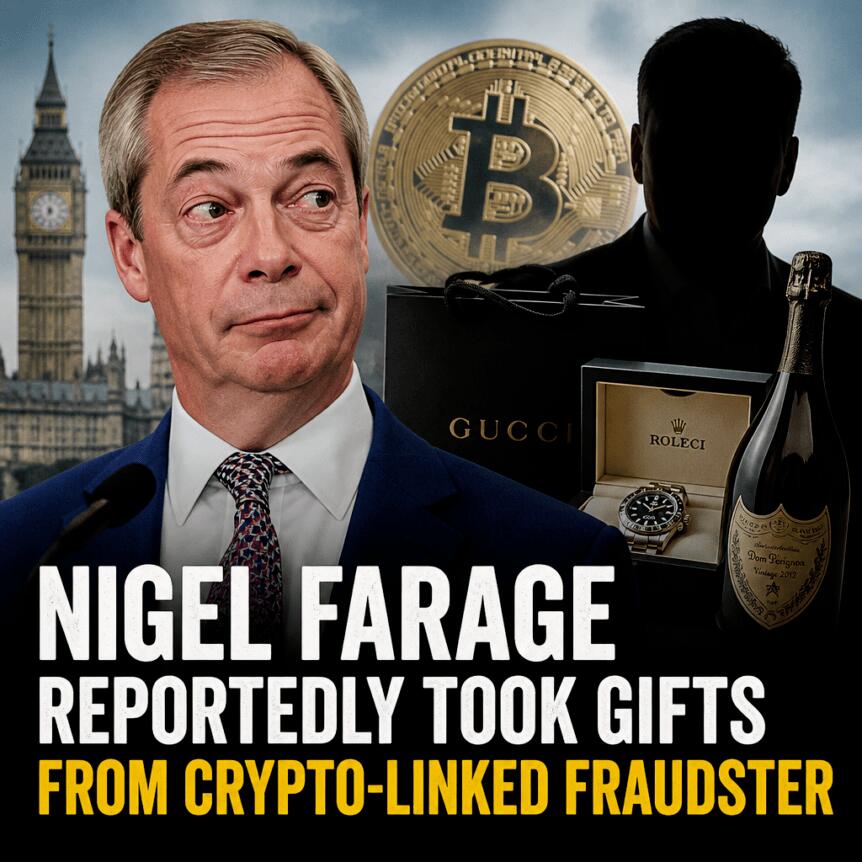
Reform UK leader Nigel Farage has denied wrongdoing after The Sunday Times alleged that he accepted undisclosed gifts from a US-convicted fraudster tied to the offshore crypto gambling world. The report says the gifts included staff support, security, and travel and accommodation provided by George Cottrell, an adviser to Farage for more than a decade.
Farage said in a statement that he “followed the rules,” adding that the story amounts to a “hit job.” The controversy arrives as UK crypto policy faces rising scrutiny, including tighter controls on political donations involving digital assets.
Key takeaways
- The Sunday Times reports Farage received additional undeclared support from George Cottrell, an associate connected to an offshore crypto casino.
- Farage denies he broke disclosure rules, with the gifts reportedly dating back to before he became an MP in July 2024.
- The allegations add to a pattern of scrutiny around Farage’s links to wealthy crypto-linked figures and political finance.
- UK crypto regulation pressure is intensifying, including a ban on cryptocurrency donations announced earlier this year.
- Ongoing complaints and inquiries show the debate is not just about crypto markets, but also about political integrity and conflicts of interest.
New allegations center on George Cottrell
In its Saturday report, The Sunday Times said Farage was gifted services that were not publicly disclosed. The gifts were attributed to George Cottrell, described as an aristocrat and a close adviser to Farage for more than 10 years.
According to the outlet, Cottrell provided access to security and drivers, including personnel described as former soldiers. The report also alleges Cottrell recruited and paid staff members to assist with the Reform leader’s social media. It further claims that, following Farage’s election, he was allowed to use a rented five-story house near Buckingham Palace, although a Reform source told The Times that Farage primarily stayed at his own home and did not routinely use that property.
The story also says Farage registered only a single benefit from Cottrell when he entered Parliament—described as less than £9,300 (about $12,400) for travel, security and accommodation related to an event in Belgium.
Farage’s response, published Sunday, disputed the implication that he failed to follow requirements. As reported by The Guardian, he said he “followed the rules” over the gifts from Cottrell.
Criminal case in the US links Cottrell to fraud allegations
The credibility of the allegations rests heavily on Cottrell’s prior legal history. The Sunday Times report states that in 2016 Cottrell was arrested and charged in the United States with 21 offenses connected to a money-laundering plot. The report adds that he pleaded guilty to a single wire fraud charge after a plea deal and served eight months in prison.
The article also ties Cottrell to an offshore gambling site, Tether.bet, which uses Tether’s USDT stablecoin. While the specific operational details of that venture are not addressed in the provided coverage, the overall framing connects his crypto involvement to the controversy over political support and disclosure.
Broader scrutiny: donations, lobbying claims, and prior watchdog action
This latest development follows a separate set of concerns around Farage and crypto-linked donors. A parliamentary standards watchdog opened an inquiry in May into whether Farage failed to declare a £5 million gift from crypto billionaire Christopher Harborne, a figure reported to have stakes in Tether. Farage has previously argued that some gifts did not require disclosure because they were provided for security arrangements before he became an MP, according to earlier reporting referenced in the original coverage.
The Sunday Times claim also comes after The Guardian reported earlier this week that Farage was accused of lobbying the Bank of England regarding its digital currency plans. In that report, Phil Brickell, a Labour MP and chair of a parliamentary anti-corruption group, was quoted describing a complaint to the standards commissioner.
Brickell’s allegation, as relayed in the cited coverage, was that Farage claimed credit for influencing the Bank’s stance on a central bank digital currency. Brickell also argued that Harborne would benefit if a state-backed digital currency were softened—particularly because it could compete with private stablecoins.
For investors and users, the significance goes beyond personal politics. It highlights how governance choices—such as how central bank digital currencies may be structured—can affect the competitive position of stablecoins and the broader crypto market ecosystem. When political figures are linked to substantial crypto-related wealth, regulators and watchdogs typically treat transparency and conflict-of-interest rules as central, not peripheral.
UK policy pressure on crypto political financing continues
The episode unfolds against a backdrop of tightening UK scrutiny of crypto-related political activity. The original coverage notes that the UK Treasury temporarily banned political donations made in cryptocurrencies in March, a step aimed at reducing the influence of opaque funding channels.
Reform’s own agenda has positioned the party as one of the more pro-crypto forces in UK politics. The coverage states that Reform published draft legislation last year intended to make the UK “the world’s premier hub for cryptocurrency.” It also notes that Reform was the first UK political party to accept donations in Bitcoin. Farage has supported proposals including cutting capital gains tax on crypto and calling for a Bank of England Bitcoin reserve.
In that context, repeated disclosures and investigations around how crypto-linked individuals fund political activities take on added weight. The central question for regulators and voters is whether existing rules are being followed—and whether policy advocacy can be separated from the financial interests of large backers.
Readers should watch whether the standards investigations advance toward formal findings, and whether new disclosure obligations—especially those affecting crypto-related political donations—continue to expand. Another open point is how any alleged lobbying over central bank digital currency plans will be evaluated in light of the relationships and benefits described in the reporting.