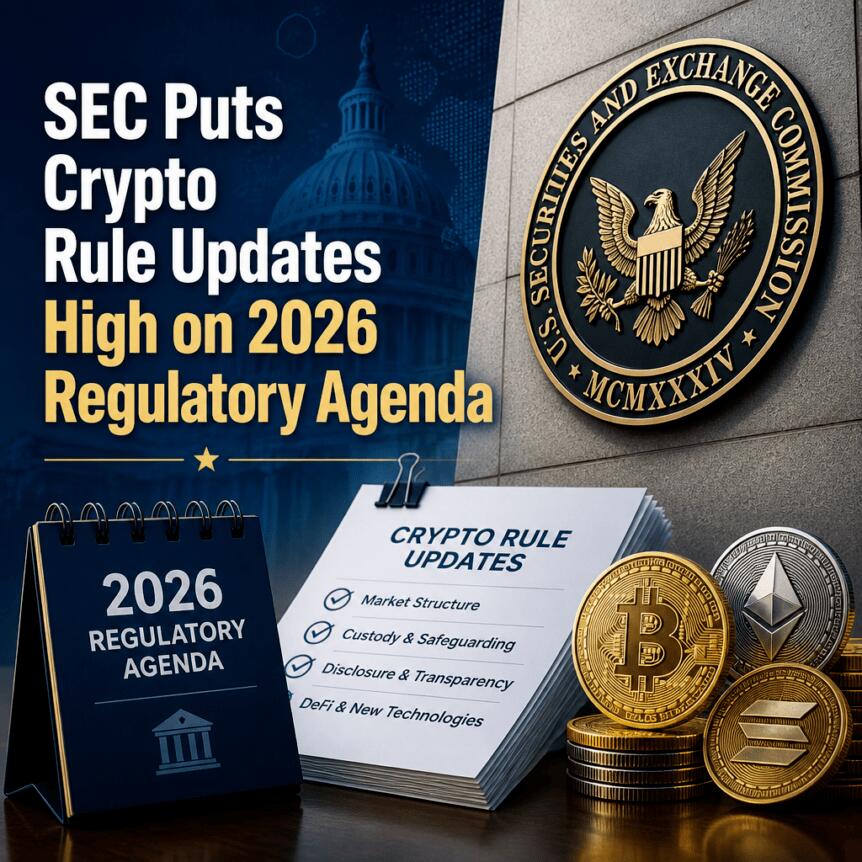
The U.S. Securities and Exchange Commission has put forward proposed rule changes aimed at tightening how crypto assets are handled under existing securities and market-structure rules, with SEC Chair Paul Atkins saying the effort is meant to reduce uncertainty for the industry.
In a Tuesday notice announcing the agency’s 2026 regulatory agenda, Atkins described the proposals as aligning with the Trump administration’s stated crypto policy priorities—particularly around tokenized securities and fundraising through digital assets.
Key takeaways
- The SEC’s 2026 agenda includes three proposed rule areas touching crypto broker-dealers, trading venues, and possible exemptions or safe harbors.
- SEC Chair Paul Atkins said the proposals are designed to clarify the regulatory framework and give investors more consistent information for decision-making.
- The SEC’s move comes as Congress debates a crypto market structure bill that could shift oversight and enforcement toward the CFTC.
- Criticism from Democratic lawmakers centers on the SEC’s prior enforcement approach and Atkins’ statements about which tokens are securities.
- Separately, President Donald Trump told reporters he became involved with crypto “a little bit for politics,” reflecting the administration’s broader political posture toward the sector.
What the SEC says it wants to clarify in 2026
According to a statement from SEC Chair Paul Atkins in the 2026 regulatory agenda announcement, the agency intends to “help clarify the regulatory framework for crypto assets and provide greater certainty to the market.” Atkins framed the agenda as a way to match the administration’s crypto goals, including how tokenized securities should be treated and how digital-asset fundraising could work within existing law.
The notice describes three proposed rule changes aimed at specific parts of the crypto ecosystem:
- Rules addressing crypto broker-dealers.
- Rules concerning digital assets traded on alternative trading systems and national securities exchanges.
- Potential exemptions and safe harbors for digital assets under certain circumstances.
On one of the agenda items related to the “offer and sale of crypto assets,” the SEC said the proposals may provide greater certainty, facilitate capital formation, accommodate innovation, and—at the same time—ensure investors receive adequate protections and the information needed to make informed investment decisions. The SEC’s description appears in the agenda documentation hosted by the federal rulemaking portal (reginfo.gov).
Congressional debate could move enforcement power
The SEC’s proposed agenda arrives amid an active legislative backdrop. The notice and related coverage come as U.S. lawmakers debate provisions in a crypto market structure bill that—if passed—could significantly alter where oversight and enforcement sit. Earlier reporting from Cointelegraph noted that certain provisions are expected to shift much of the industry’s oversight and enforcement from the SEC to the Commodity Futures Trading Commission (CFTC). Cointelegraph’s coverage referenced this potential move in the context of broader market structure reform.
In March, Atkins also indicated the SEC would pursue an internal “bridge” approach to clarify crypto regulation, while signaling he might defer to legislation if Congress acts. Earlier Cointelegraph reporting described this as the SEC trying to provide more guidance without waiting for the full legislative outcome. That earlier Cointelegraph piece detailed Atkins’ comments on the SEC’s willingness to clarify through its own process.
For market participants, the timing matters: the SEC’s 2026 proposals could shape compliance expectations even if Congress eventually changes the agency landscape. Traders and platforms may need to plan for overlapping standards—especially where rules implicate broker-dealer responsibilities, trading venue obligations, and how exemptions or safe harbors might apply.
Political pressure and renewed criticism from lawmakers
The SEC’s agenda also faces political scrutiny. Critics within the Democratic Party have accused the administration of enabling a “pay-to-play scheme,” according to a letter referenced in the report, which alleges individuals associated with the administration financially benefited from companies that were previously entangled with enforcement actions or regulatory concerns. The companies cited in the letter include Binance, Coinbase, Ripple Labs, and Kraken.
In the same line of criticism, three Democratic House members argued that the SEC’s decision to let certain parties “go without consequences,” combined with Atkins’ public remarks that “most crypto tokens are not securities,” has created what they described as a regulatory vacuum—one that they say leaves securities violations insufficiently enforced and investors insufficiently protected.
The referenced letter is dated January and addressed to Atkins, according to a document made available by the House Financial Services Committee’s Democrats. (House Democrats letter PDF)
While the SEC’s agenda is presented as an effort to increase regulatory clarity, lawmakers’ criticism underscores the fundamental tension: whether “clarification” will lead to tighter accountability for issuers and intermediaries—or whether the SEC’s framework will continue to be perceived as uneven in how it applies securities laws to crypto assets.
Trump’s comments highlight the administration’s shifting posture
Separately from the SEC’s rule agenda, President Donald Trump commented on his evolving relationship with crypto. In response to questions from reporters on Monday, Trump said he became involved with crypto “a little bit for politics,” according to coverage cited in the report. He had previously called Bitcoin a “scam” after the start of his first term, but later engaged more publicly with industry figures and promoted the technology ahead of the 2024 election.
That shift in political stance does not directly determine how SEC rules are drafted, but it helps explain why the agency’s 2026 agenda is being framed as consistent with the administration’s broader crypto objectives—particularly around capital formation and tokenized asset activity.
Looking ahead, market participants should watch how the SEC translates these agenda items into actual proposed rule text and whether the proposals’ scope overlaps with—rather than is superseded by—any congressional market-structure changes that could redirect oversight toward the CFTC.