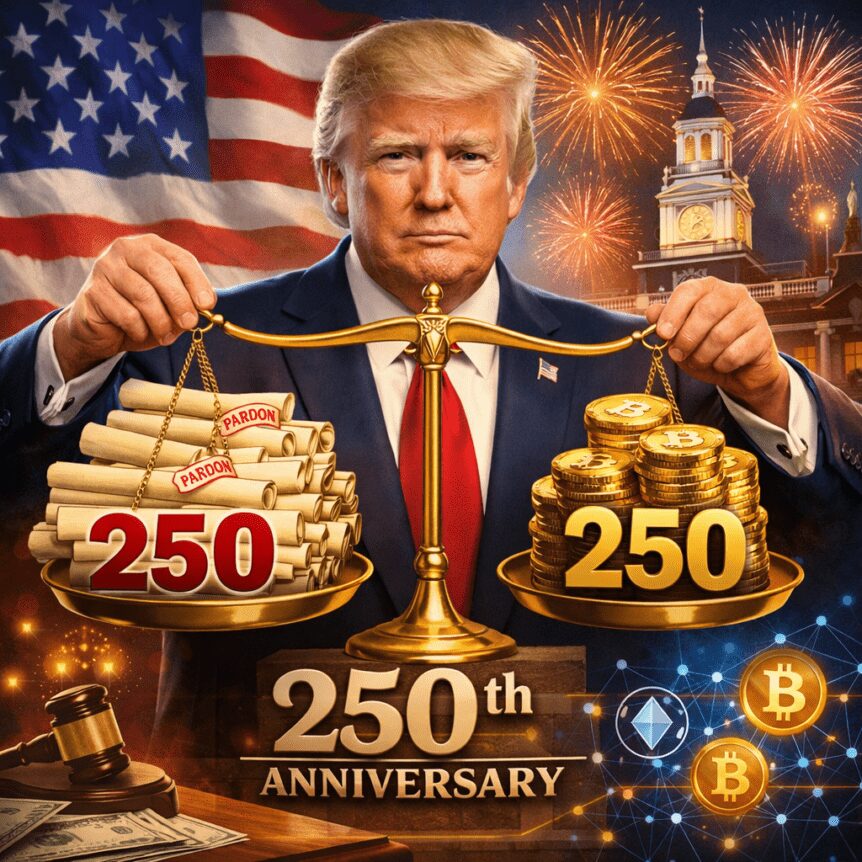
The Wall Street Journal reports that US President Donald Trump is weighing a broad slate of pardons to mark America’s 250th birthday on July 4. The plan could involve as many as 250 clemencies, with an official decision possibly announced on June 14, Trump’s birthday, or during Independence Day celebrations. The pardons are still in early, unconfirmed stages, and more than 16,000 formal requests for presidential clemency were filed last year.
Trump’s return to the political stage last year saw him issue more than 1,500 pardons related to the January 6 Capitol attack. In the crypto community, several founders and supporters have publicly pressed for clemency since his inauguration, highlighting a connection between policy signals and the fate of high-profile crypto figures.
Key takeaways
- The White House is reportedly considering up to 250 pardons to commemorate the 250th birthday, with a potential public announcement near June 14 or July 4. The plan remains unconfirmed.
- Among those rumored to seek presidential clemency are figures from the crypto sector, including high-profile cases linked to the industry’s collapse and privacy tools, though formal petitions have varied in visibility and urgency.
- Sam Bankman-Fried, the founder of FTX, was convicted on seven counts and sentenced to 25 years in prison. He has publicly lobbied for a pardon, but reports indicate Trump has ruled out considering his case.
- Keonne Rodriguez, a co-developer of the Samourai Wallet privacy-focused protocol, has publicly expressed hopes for a pardon, and a Change.org petition has drawn thousands of signatures.
- Petitions for the Tornado Cash founders, Roman Storm and Roman Semenov, have appeared, though they have only a handful of signatures and Storm is not publicly seeking a pardon while Semenov remains at large.
- Several crypto figures have already received pardons previously, including BitMEX co-founders and, in some cases, crypto executives tied to regulatory lapses. The administration’s stance on crypto-related clemency has shaped debate within the community.
Pardons on the horizon and the crypto angle
According to the Wall Street Journal, the proposed slate of up to 250 pardons would be designed to mark America’s 250th anniversary. The timing remains fluid, with the White House weighing a June 14 reveal or a formal announcement tied to the July 4 festivities. The plan is still in its early stage and has yet to be confirmed by official channels. The Journal noted that more than 16,000 formal clemency requests were filed last year, underscoring the volume of petitions the administration processes each cycle.
The broader political context matters for the crypto community because pardons serve as a signal about the administration’s tolerance for controversial tech and privacy tools. The report follows Trump’s broader pattern in his first year back in office of granting dozens of pardons, including those connected to the Capitol riot, which crypto advocates have watched closely as a barometer for policy leniency toward digital innovations and privacy-first tooling.
Who, exactly, could benefit in the crypto space?
Among the individuals raised in discussions around clemency is Sam Bankman-Fried, the founder of FTX. Bankman-Fried was convicted on seven counts related to the collapse of the exchange and sentenced to 25 years in prison in 2024. He has mounted a social-media-driven campaign for a pardon, but a report from The Times suggested that Trump had ruled out considering his case earlier this year. The topic remains a focal point for debate within crypto circles about whether policy figures should distinguish between criminal liability and potential future contributions to innovation.
Keonne Rodriguez, a co-founder and advocate behind the Samourai Wallet privacy protocol, has publicly signaled hope for clemency. A petition on Change.org around Rodriguez has attracted a notable level of attention, reflecting the thriving discourse among privacy advocates who see the case as emblematic of debates over code as free speech and the balance between user privacy and regulatory oversight.
There are also petitions advocating pardons for Tornado Cash founders, Roman Storm and Roman Semenov. Storm, convicted last August on charges related to operating an unregistered money-transmitting business and alleged money-laundering conspiracy, is not publicly seeking a pardon. Semenov, by contrast, remains sought by federal authorities and is listed as wanted by the FBI. The petitions have garnered only a small number of signatures, highlighting the uneven public appetite for clemency in complex crypto cases.
Crypto advocates have long argued that the developers behind privacy-focused or decentralization-oriented tools should not bear responsibility for the actions of third parties who use their software. The debate around such cases remains central to ongoing discussions about how policy should treat developers of open-source and privacy-preserving technologies.
Earlier pardons and the crypto cohort
Trump’s second term has already seen some crypto figures granted clemency. Notably, the White House pardoned the co-founders of BitMEX—Arthur Hayes, Benjamin Delo, and Samuel Reed—after they pleaded guilty to violations of anti-money-laundering and know-your-customer provisions under the Bank Secrecy Act. The clemency adds to a precedent in which high-profile industry participants receive relief under political tides that intersect with regulatory challenges in crypto markets.
In addition, the crypto community has tracked other notable pardons linked to the broader tech and crypto ecosystem, including a reference to Changpeng “CZ” Zhao and his pardon in 2025 following his earlier four-month prison sentence for a Bank Secrecy Act-related violation. The broader picture of which crypto figures receive clemency—and why—remains a point of contention between policymakers, industry participants, and advocates for privacy-focused tools.
Meanwhile, Ross Ulbricht, the founder of the Silk Road marketplace, was among the early crypto-related clemencies, receiving a pardon in January 2025 after serving a life sentence tied to his operation of the platform. Observers note that such cases underscore the difficulty of drawing clean lines between criminal activity, innovation, and advocacy around open-source and decentralized software.
What this could mean for investors and builders
If a broader set of pardons extends into individuals connected to crypto tools or privacy-enhancing technologies, markets could interpret it as a signal of policy openness toward crypto innovation and non-traditional financial tooling. Pardons can influence sentiment around regulatory risk, project development, and the willingness of founders to engage with policymakers. Yet the process remains uncertain, and not all petitions or campaign efforts translate into clemency.
Investors and builders should watch for official statements from the White House and any forthcoming announcements that tie clemency decisions to policy signals, rather than individual reputational considerations. The interplay between clemency decisions and crypto regulation—particularly around privacy tools and unregistered financial activity—could shape how projects approach compliance and global expansion in the coming months.
As the discussion unfolds, readers should monitor updates from official channels and reputable reporting on how the pardon process is evolving and who, if anyone, emerges as a clemency recipient within the crypto ecosystem. The next steps remain uncertain, but the potential implications for crypto policy and innovation are already drawing attention across industry and investor circles.
Readers should stay attuned to any formal White House statements or official notices that clarify which cases were considered and on what basis clemency decisions were made, as these details will influence perceptions of governmental support for crypto innovation and privacy-focused tooling in the years ahead.