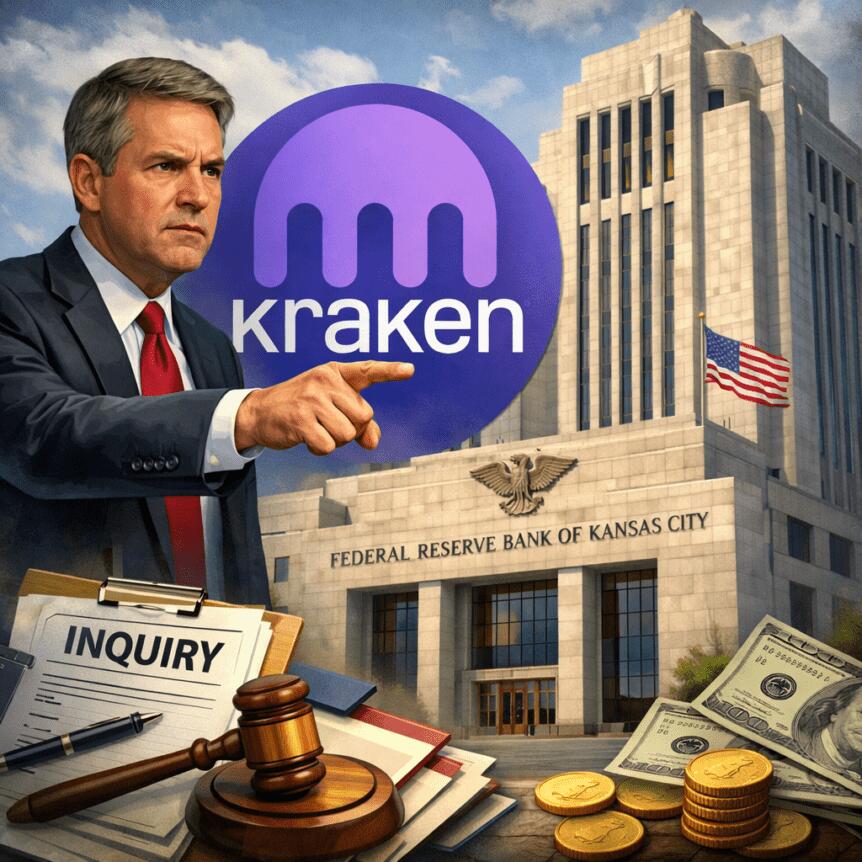
In a move that underscores how closely U.S. regulatory rails and crypto-native services are converging, Representative Maxine Waters, the ranking Democrat on the House Financial Services Committee, is demanding details from the Federal Reserve Bank of Kansas City about Kraken Financial’s newly approved limited-purpose master account. The inquiry, sent in a letter this week, seeks clarity on what the approval means in practice, what Fed services Kraken can access, any conditions or restrictions, and how anti-money laundering and consumer protection measures were evaluated.
Kraken’s banking arm was granted a limited-purpose master account by the Federal Reserve Bank of Kansas City earlier this month. The development is widely viewed as a watershed moment for the U.S. crypto industry, signaling that several crypto-related firms have pursued entry to the Fed’s master accounts for years, a pathway that could bring them onto the same payments rails used by banks and credit unions.
Waters notes in her letter that the Kansas City Fed’s announcement does not disclose specific information about Kraken’s access to the full spectrum of Federal Reserve financial services due to the confidentiality of information provided by applicants. She asks Fed President Jeff Schmid to respond by April 10 with a detailed account of what the master account entails in practice, including which services Kraken can tap and the safeguards in place.
“Answers to these questions are critical to ensuring that the process of approving Federal Reserve Bank account access is conducted consistently with the law, with impartiality, and in a manner that continues to foster a safe and efficient payment system,” Waters wrote. The letter frames the issue as one of ensuring policy, regulatory, and consumer protections keep pace with rapid innovation in payments, tokenization, and related technologies.
Key takeaways
- Kraken Financial received a limited-purpose master account from the Federal Reserve Bank of Kansas City, a move that could grant direct access to Fedwire and other payment rails.
- Waters has called for a public, detailed accounting by April 10 to clarify what Kraken can access, the conditions attached, and the AML and consumer protections considered in the decision.
- The Fed’s disclosure emphasizes confidentiality around business information supplied by applicants, complicating public assessments of the potential systemic implications.
- Kraken is not alone in seeking Fed master accounts; other crypto firms have pursued similar access, including Custodia Bank, Anchorage Digital Bank, and Ripple’s Standard Custody & Trust Company.
- Political and regulatory dynamics around crypto access to the U.S. financial system remain contentious, with advocacy groups and lawmakers pushing for more transparency and safeguards.
Kraken’s milestone and what it could mean for the payments landscape
Access to Fedwire via a master account would effectively place Kraken on a direct, regulator-backed payments infrastructure—an alignment that could reduce settlement frictions and settlement risk for digital-asset businesses. The potential to operate on rails that are already deeply embedded in the U.S. banking system has long been viewed as a crucial step toward broader mainstream participation by crypto services.
However, the Fed’s decision to withhold granular details about the scope of Kraken’s access signals the tension between opening gatekeeping infrastructure to innovative firms and preserving safety, soundness, and compliance standards. Waters’ letter frames this as a broader governance question: how to administer access to critical financial infrastructure in a way that is lawful, evenly applied, and capable of supporting a safe and efficient payments ecosystem as digital assets evolve.
The timing also matters. The master-account pathway has been a long-pursued objective for several crypto companies, reflecting a broader industry push to compete on an even footing with traditional financial providers. The Reuters-laden narrative of the sector’s progress has often highlighted the friction between innovation and regulatory frameworks—an area Waters has repeatedly signaled she intends to scrutinize more closely.
Broader context: who else is pursuing master accounts
Kraken isn’t the only crypto-focused entity Eyeing master-account access in the United States. The industry has seen sustained interest from several high-profile firms. Custodia Bank filed petitions and pursued legal avenues to renew its bid for a master account in late 2025, drawing scrutiny and debate over how such access should be regulated. Anchorage Digital Bank also applied for a similar arrangement in the preceding year, while Ripple and its subsidiary Standard Custody & Trust Company have been among other contenders exploring the pathway.
These efforts collectively reflect a longer trend: incumbents and disruptors alike are seeking a way to bridge digital-asset services with the core payments framework that underpins the U.S. financial system. The implications extend beyond individual firms to how regulators balance competition, risk management, and consumer protection as newer technologies reshape the payments landscape.
Regulatory tension and the political stance on crypto
Waters’ stance on crypto is well-documented across public statements and voting records, a point highlighted by advocacy groups that monitor policymakers’ crypto positions. Stand With Crypto has labeled her as “strongly against crypto,” citing multiple statements and votes unfavorable to crypto legislation, including debates over the Digital Asset Market Structure and relevant regulatory acts. The group’s barometer underscores how policy alignment—and potential shifts in regulatory posture—will influence how the master-account initiative unfolds in practice.
In the past, Waters has signaled concern about the pace of crypto enforcement and oversight, including calls for hearings related to the Securities and Exchange Commission’s approach to crypto regulation. A recent note from the group referenced a broader debate about whether enforcement and oversight are keeping pace with innovation, a theme that directly intersects with the master-account discussions and the governance surrounding access to critical financial infrastructure.
For investors and builders, the central question is what kind of guardrails will accompany any future access to Fed rails. Will the process remain tightly bound to existing banking standards and AML/counterparty risk controls, or will new, crypto-specific frameworks emerge to address novel uses of programmable money and tokenized assets? The current inquiry from Waters adds a notable layer of oversight, signaling that transparency and formal legal grounding will be prerequisites for broader access going forward.
Related reporting from Cointelegraph and related coverage underscored that the master-account pathway has attracted attention precisely because it could alter the efficiency, reliability, and cost of operating crypto-dependent services in the United States. As the regulatory conversation evolves, observers will be watching not only for the next public disclosures but also for any updates to the regulatory framework that may accompany expanded access to the Fed’s payments rails.
What comes next
The next phase hinges on the Federal Reserve Bank of Kansas City’s response to Waters’ questions by the stated deadline and how much detail the Fed is able or willing to disclose about Kraken’s access. Beyond that, the broader ecosystem will be watching whether the Fed’s master-account program expands to additional applicants and how other agencies coordinate with the Fed to maintain a consistent, risk-based framework for digital-asset firms seeking access to core payments infrastructure.
As always, the evolving landscape will be shaped by regulators, lawmakers, and industry participants—each weighing the benefits of faster, more integrated payments against the imperative to protect consumers and preserve financial stability. Readers should stay alert to subsequent disclosures from the Kansas City Fed, any formal responses from Kraken, and broader regulatory developments that could redefine how crypto companies interact with the U.S. financial system.