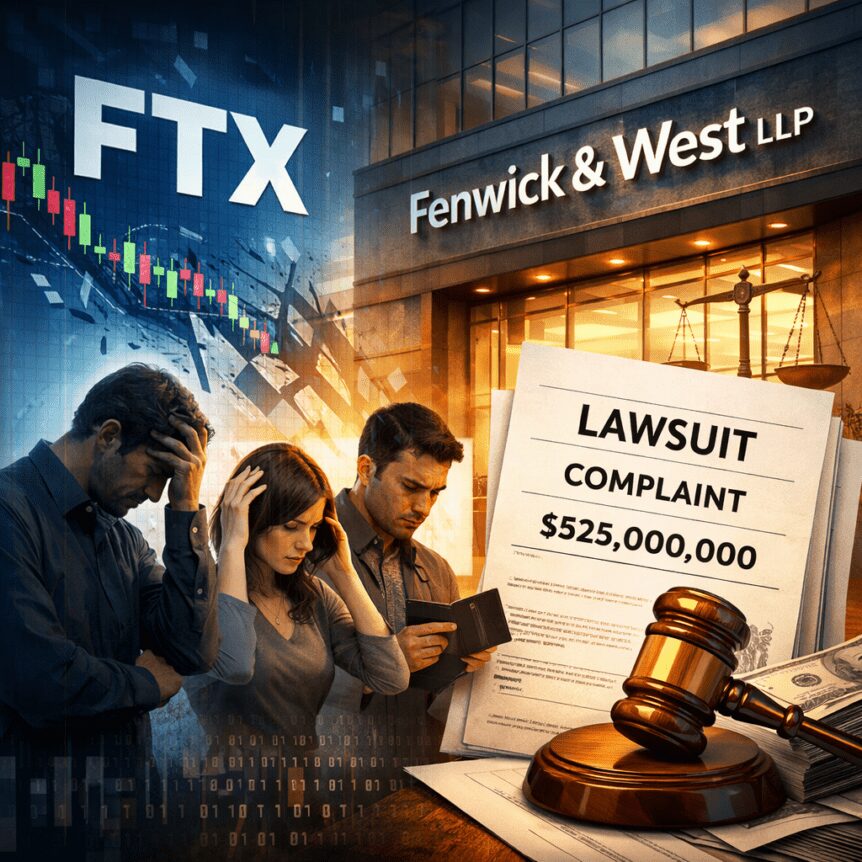
A cohort of 20 FTX victims across five jurisdictions has filed a $525 million lawsuit against Fenwick & West LLP, asserting that the renowned Silicon Valley law firm helped conceal the collapse of the crypto exchange. The complaint was filed in the U.S. District Court for the District of Columbia and names Fenwick alongside six individual defendants. The plaintiffs contend that Fenwick’s involvement lent an aura of legitimacy to FTX that deterred withdrawals and contributed to the financial ruin of the victims.
At the heart of the suit are statements attributed to Nishad Singh, FTX’s former director of engineering, who pleaded guilty to fraud charges and testified at the criminal trial of Sam Bankman-Fried. Singh allegedly told Fenwick attorneys that customer funds were being misused, but the firm purportedly advised on how to conceal the activity rather than distance itself from the matter.
The complaint goes further to claim Fenwick helped establish North Dimension Inc., a Delaware shell company that posed as an electronics retailer but allegedly funneled more than $3 billion in stolen customer funds. It also accuses Fenwick of supporting FTX’s Signal auto-delete messaging policy, a system federal prosecutors cited as a tool that impeded regulators and investigators from uncovering the fraud.
Related context: No further commentary is provided within this article, but the broader coverage links to ongoing reporting on FTX-related developments.
Key takeaways
- The plaintiffs accuse Fenwick & West of assisting in concealing FTX’s misappropriation of customer funds and of creating corporate structures to obscure transfers.
- testimony cited in the complaint references Nishad Singh’s admissions and claims that Fenwick advised on how to hide the misconduct rather than intervening.
- The suit implicates a Delaware shell entity, North Dimension Inc., as a vehicle for moving funds, with allegations of more than $3 billion in diverted customer assets.
- The complaint asserts seven claims, including malpractice, fraud, and gross negligence, seeking more than $525 million in compensatory damages, plus recovery of legal fees and punitive damages against two Fenwick partners.
- The case unfolds in the wider regulatory and prosecutorial scrutiny surrounding FTX, underscoring professional-liability risks for firms affiliated with crypto-enabled fraud cases.
Fenwick’s role under scrutiny and the examiner’s findings
A court-appointed bankruptcy examiner, whose 2024 report reviewed more than 200,000 documents, concluded that Fenwick appeared to be “deeply intertwined in nearly every aspect of FTX Group’s wrongdoing.” The examiner asserted that Fenwick helped create the corporate structures used to obscure transfers, formed shell entities, and drafted backdated agreements intended to legitimize illicit movements of funds. The lawsuit cites these conclusions as corroborating the plaintiffs’ claims of professional misconduct and complicity in the fraud.
According to the plaintiffs, Fenwick’s involvement extended beyond advising on transactions to shaping the structure and messaging around the scheme. The complaint maintains that Fenwick drafted and supported arrangements that facilitated the concealment of customer fund misappropriation, a narrative reinforced by Singh’s testimony and the examiner’s findings. For the plaintiffs, these elements collectively underpin a theory of liability grounded in sustained professional complicity rather than isolated missteps.
Post-bankruptcy actions and ongoing litigation context
Following FTX’s bankruptcy filing in November 2022, Fenwick removed FTX mentions from its public site and reportedly engaged high-profile defense counsel at Gibson, Dunn & Crutcher in anticipation of civil litigation. The plaintiffs’ filing emphasizes these moves as indicative of the firm’s awareness of potential liability and regulatory exposure linked to its work for FTX and Alameda Research.
In a separate but related legal development, a federal judge previously denied Sam Bankman-Fried’s bid for a new trial, ruling that his claims of newly available evidence were unfounded. The judge noted that the asserted witnesses and purported evidence were known well before the trial and did not alter the core record. While not a direct ruling on Fenwick, the decision sits within the broader FTX litigation landscape and the ongoing enforcement and courtroom activity surrounding the affair.
Regulatory, enforcement, and professional-liability implications
Beyond the specifics of the Fenwick suit, the allegations highlight critical considerations for law firms operating in the crypto space. The case casts a spotlight on the professional responsibilities of lawyers who advise high-profile crypto platforms and the extent to which law firms may be drawn into allegations of facilitating regulatory evasion or misrepresentation. For financial institutions, exchanges, and investors, the proceedings underscore the potential for heightened scrutiny of outside counsel engagements, due diligence practices, and the governance structures that underpin major crypto entities.
From a regulatory perspective, the matter intersects with broader enforcement themes across U.S. authorities and international frameworks. While the U.S. focus remains on criminal and civil accountability for misrepresentation and misuse of customer assets, related discussions at the regulatory level touch on licensing, oversight of crypto-related financial activity, and the boundaries of professional conduct for firms advising on such platforms. The evolving policy landscape continues to shape how professional services firms participate in crypto markets, including issues related to potential conflicts, backdating of agreements, and the creation of shell entities intended to obscure fund flows.
What to watch next
The case against Fenwick & West is positioned to contribute to ongoing debates about accountability in the crypto service ecosystem, especially for firms that provide legal and regulatory guidance to exchanges and related entities. As the District of Columbia case advances, observers will be watching for the court’s handling of the seven claims, any forthcoming discovery related to the North Dimension structure, and potential settlement dynamics that could influence professional liability standards for law firms involved in high-profile crypto cases.
Closing perspective
As the FTX narrative continues to unfold in courtroom and regulatory settings, the Fenwick suit illustrates the tightening nexus between crypto operations, legal counsel, and enforcement outcomes. The outcomes of this litigation could have meaningful implications for how law firms support or scrutinize exchanges’ governance, fund flows, and compliance frameworks in an increasingly regulated and scrutinized crypto market.